

Colin Clark
Minami Lane is a little piece of magic. In the game developed by Doot, Blibloop, and Zakku, and published by Wholesome Games Presents, you’re tasked by a tanuki to create the best little street you’ve ever dang seen. Every mission level you’re given a task such as “bring in more young folx to the community of septuagenarians.” Every day you’re given the opportunity to build one new building – whether that’s a new house for new villagers, a ramen shop, a karaoke bar, or the street service center – and you also get a chance to upgrade your existing building. Each day, villagers wander your street, eating lunch, going to the konbini, or grabbing flowers at the florist. As the day progresses you pick up trash on the street, pet cats, and… click on bicyclists… But, most importantly, you can click on each villager to see what they’re thinking. They’ll tell you they would prefer more noodles in their ramen, different items at the konbini, or how many books they just purchased, among a slew of personal thoughts – the product of great writing. There are 5 missions to complete, and a sandbox mode unlocked from the start.
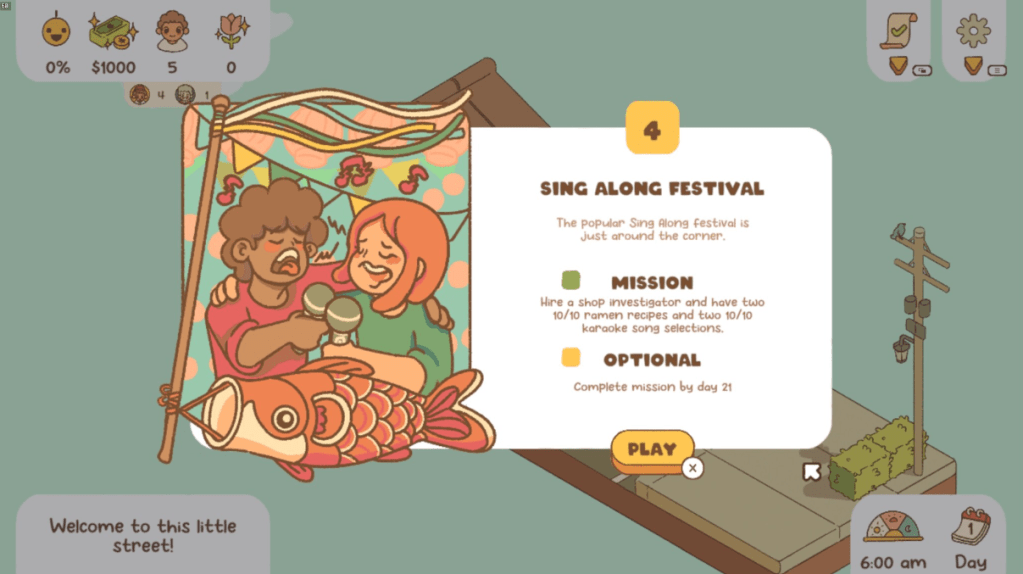
Every day the newspaper arrives, bringing with it random new conditions for the day. I spent the first part of Mission Four honing in a perfect ramen recipe for youth villagers, adding noodles and pork, taking out shrimp, and adjusting the price until I reached the 10/10 goal in my day’s wrap-up screen, just for the newspaper to arrive the following morning, telling me that from now on youth villagers prefer a different ramen recipe. Minor frustrations and setbacks are easily forgiven, as managing your street and building new services is a quiet and blessedly simple game loop. Minami Lane is a cheerful, bright, colorful and engaging-if-simple thesis on community.
What Minami Lane actually does is show the unbeatable – and in America, often unobtainable – benefits of living in a walkable, mixed-development neighborhood community. Minami Lane made me cry.
I work on a street much like Minami Lane, and live a five minute walk away. I bartend full time at a little twelve table restaurant on the street. I walk to work every morning, passing by all the shops and neighbors I’ve come to know so well in the last two years. We have a handful of restaurants, an incredible three-story used book store, a vintage dress and accessories shop, and in what I can only describe as spookily similar to Minami Lane: a boba shop and a little independent konbini of our own. Everyone who works on the street knows each other and we treat each other like royalty. My friend at the dress shop comes and sits at my bar a few times a month and tips an obscene amount, if only for the bit. My partner and I often go to another restaurant down the street for brunch to see our buddy Dave when he’s on bar. I bought Christmas presents from the dress shop and book store. There are days I walk a to-go lunch across the street from the restaurant to the owner of said book store. I make a habit of stopping by the dive bar down the street on my way home after a long shift. I pick up milk from the konbini, and I wave to a regular from across the street. We walk over to our octogenarian friends’ house for post Christmas dinner drinks. We shovel our neighbor’s walk. We leave cookies on each other’s doorstep. And we chat. We talk about the general public – who we serve day in and day out – we talk about what it’s like living in the shit-storm of a political climate called America, we talk about video games, music, movies, television, books and board games. And most importantly, we talk about the neighborhood and what’s going on in our own individual lives. It takes all of us to build and maintain this community, and it’s something we do willingly, subconsciously, and with great care every single day. We rely on each other.
Moving to this kind of community is the best thing I’ve ever done for my life, aside from marrying my amazing partner. It has drastically changed my life for the better. In battling my autism, and potential unwillingness to have social interactions, I’ve always tried so hard to be a part of one or more communities in my adult life – whether that be the service industry and music scene in my twenties, or the queer and video game communities in my 30s. Now, my community is constantly and permanently surrounding me, and it’s made up of people from all walks of life. There are more people than I can count that I know have my back, and I have theirs. I am unbelievably, impossibly, and eternally gratefully lucky. The majority of us don’t have the opportunity I’ve had. So many people live in suburban neighborhoods, a ten-plus minute drive from any restaurant or local shop. Many of us live in rural areas or small towns that simply don’t have communities like this. I’ve been that person who feels completely disconnected from any community. It can be unbelievably traumatizing to feel that deep level of disconnect. There were times in my early adult life when I didn’t really know what community was. For so many of us, this lifestyle is simply unobtainable. For some of us, it’s a lifestyle that isn’t desirable.
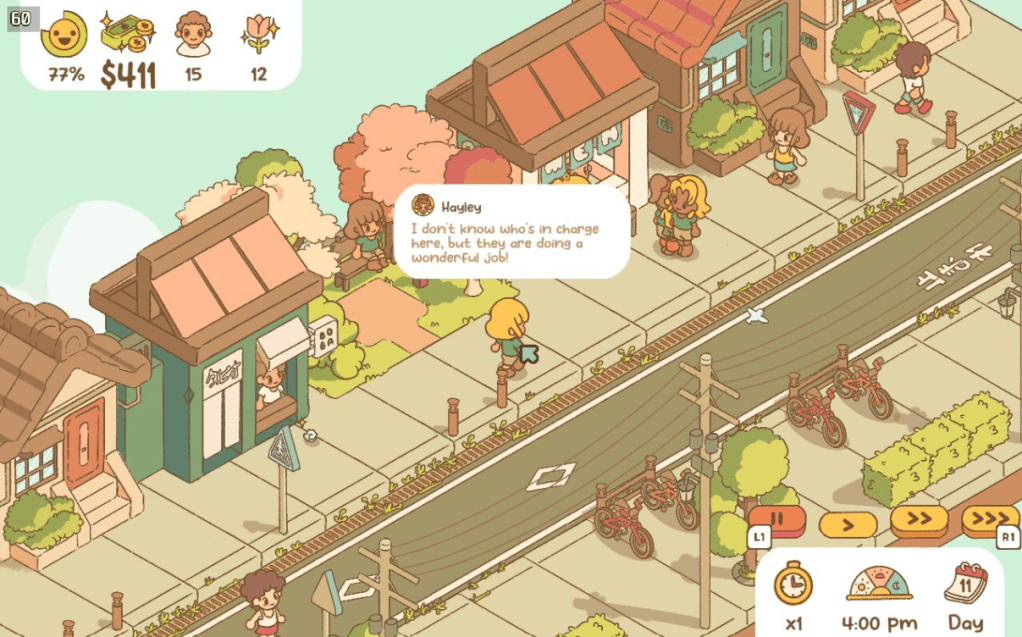
But I truly believe that the most important thing we have in life are the communities we are a part of. Some of us have also figured out that we can be part of any number of different communities through the literal magic of technology. We chat on Discord servers, we visit each other’s blogs. We listen to each other’s podcasts. We play each other’s games. And just like with our local community: we talk. About everything. Minami Lane reminds us of the importance of community. Minami Lane asks us what we have done for our community lately.
What does your community look like? Who do you surround yourself with? Where do you go when you need to talk about everything?
Minami Lane can be purchased on Steam and itch.io for $4.99 and you can check out the rest of Doot Tiny Game’s games here. Support them if you can. Make them part of your community!

 gAmeDHD
Leave a comment