
Colin Clark
Philips, Animation Magic, and Viridis didn’t set out to make bad games. I’ll stick my neck out right at the top here to say they didn’t make bad games. They didn’t necessarily make great games, but they certainly made a trio of games that stand out through the annals of time, peering up at us from the 90s like crazed, forgotten step-children of the Nintendo universe. The partnership Philips had scored with Nintendo, which was supposed to be a huge windfall for both companies, is generally looked back upon with confusion and mockery. Nintendo originally had a deal with Sony to bring a Compact Disc add-on component to the SNES. The deal, however, was a sham, a ruse. It was Sony’s initial play to enter the home console marketplace. Nintendo then turned to Phillips, Sony’s other former business partner, in an attempt to integrate Compact Disc technology into their ecosystem. The result: Phillips acquired limited – though seemingly unlimited – rights to some key Nintendo IPs and characters. The big ones. The Philips CD-i had three subsequent Legend of Zelda titles: Faces of Evil, Wand of Gamelon, and Zelda’s Adventure. The first two feature Link and Zelda, respectively, in 2D puzzle platforming adventures. The third, Zelda’s Adventure, follows Zelda from an orthographic perspective of view (a-la The Legend of Zelda or A Link to the Past), but with FMV captured models and cutscenes. In a series of “hated” Nintendo games, Zelda’s Adventure is the one that even many folks who love the first two avoid at all cost. Despite the sea of memeified debauchery and YouTube Poops that these three games have spawned in the video game industry, they all have a dedicated, loyal, and tight-knit following. Faces of Evil and Wand of Gamelon even inspired a lovingly crafted homage in Arzette by Seedy Eye Software earlier this year. I decided to attempt to find out what drives people to show such devotion to these games I have been told are so incessantly bad. What I found was a community that finds joy in what other’s so casually disregard or even mock, and a game that embraces its influences’ imperfections and turns them into boons. My search has grown so convoluted I’ve decided to split it into three separate articles to be published interspersed with other writings here on gAmeDHD. This is a large project. Part One – the one you’re reading now – focuses on the history of the games, and a vertical slice of Wand of Gamelon – a partial “review”. Part two takes a look at the community surrounding these fine pieces of work. And finally, part three will be a review of Seedy Eye Software’s 2024 offering Arzette, contextualized with what we learn from the two preceding articles.

I wanted to give myself the most authentic experience possible, so I went about setting up emulation to run Zelda: Wand of Gamelon on TinyCDi. Turns out Phillips CD-i emulation is in a sketchy place at the best of times. A lot of effort has gone into preserving this precious format, and it’s a difficult one to emulate around. Original hardware is expensive, and copies of these games are outrageously expensive. What I quickly, and gratefully, turned up was a set of remakes of the two original games. While these remakes do away with some minor – if infuriating – quirks of the original, such as Zelda lurching forward when she swings her sword, the spirit remains intact. And I just don’t have the willpower or technical knowhow to wrestle with CD-i emulation. And that’s coming from someone who has a dominating hobby of emulation and retro handhelds. I did, however, get Zelda’s Adventure running with the help from lajeandom’s youtube video and download package you can find here. I wanted to enjoy these games. As much as they can be enjoyed. You can follow the saga, as well as find download links for the remakes here. For gameplay review purposes, I played the remakes with remastered mode turned off. An eternal debt is owed to Dopply for the years of hard work he put into this project, so freaks like me could approach these games without wanting to tear our hair out over cost or technical limitations. Thank you, Dopply.
Wand of Gamelon and Faces of Evil were released the same year as my favorite Zelda installment, Link’s Awakening. At this point, one of the four games released on Nintendo first party hardware had predominantly featured 2D side-scrolling and platforming. This may help contextualize, in part, the seemingly bizarre approach WoG and FoE take to the Zelda Franchise. Both games offer a level of difficulty common in early 90s platformers, and the “puzzles” can be a bit of a challenge. WoG and Foe do a fairly good job at directing you where to go next, as far as puzzles are concerned. I only got stuck-stuck a few times in WoG. The budget and development time frame also explain away, in part, just why these two games are how they are. Both games were developed simultaneously over the course of just under one year, with a budget of about $600,000. That is none time, and none money. The CD-i was in the early-middle of its development cycle by 1993, but by then it was clear that things weren’t going to go as planned. The CD-i was initially priced at around $700 (about the equivalent of $1,600 in 2024). Philips had pitched it as an all-around media device to be used for home entertainment and edutainment, as well as for businesses and tech companies. Two types of controllers were offered, one vertical – actually spookily similar to remotes we see in 2024 for Amazon TV sticks and the like – and one resembling a more familiar home console controller – d-pad and three or four buttons depending on the model. Neither are reported to have been the best feeling controllers on the market at the time. After years of delays, the CD-i slowly lost consumer interest, and never garnered any real attention in the home or business sectors. In a 1990 article of ACE Magazine, Ron Gilbert, creator of Monkey Island said “The CD-I specifications look great, but where are the machines? If they’d come out four years ago, they’d have been hot, but now they’re behind the times.” Not even Zelda and Mario could save the doomed Philips console.
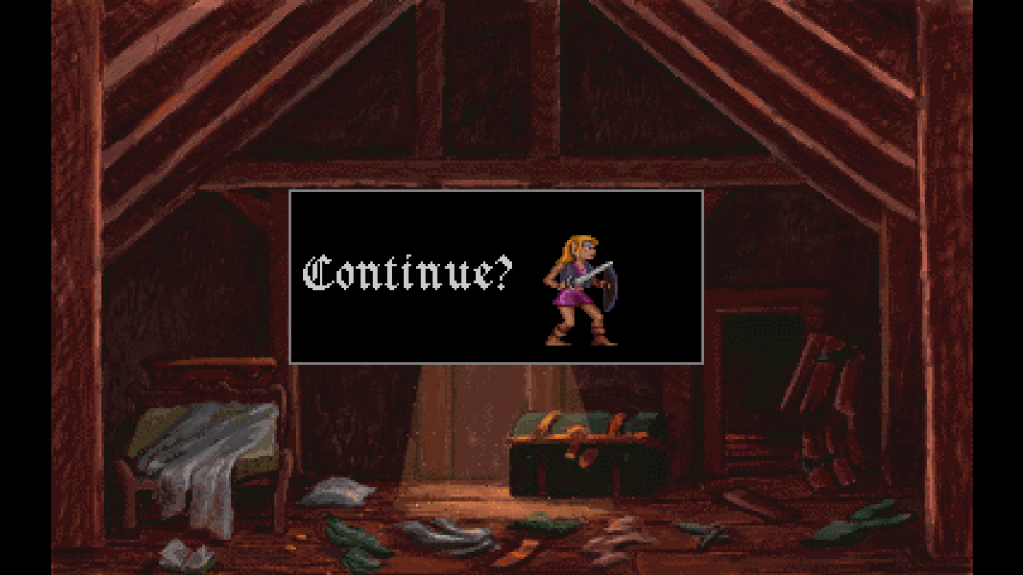
The convoluted steps that lead to success. I mean failure. I mean death. Step 1: Find lantern, find shop, buy oil, figure out how to open inventory, figure out how to use item, fumble, die, try again, die, try again, climb to top of house, get reward in attic, die. Step 2: find joy in Wand of Gamelon.
I dove head first into Wand of Gamelon, the echoes of rumors of a terrible game echoing in my brain. Me, trying to give the game its due credit. A fair shot. Yes, perhaps these shouldn’t be compaired to Nintendo produced Zelda games, but is that fair if they bear the name? How can I draw a line and review these as something of their own? How does playing the remastered version alter my perception of the original game? Is playing on a keyboard fair, or should I play on controller? (I did both).
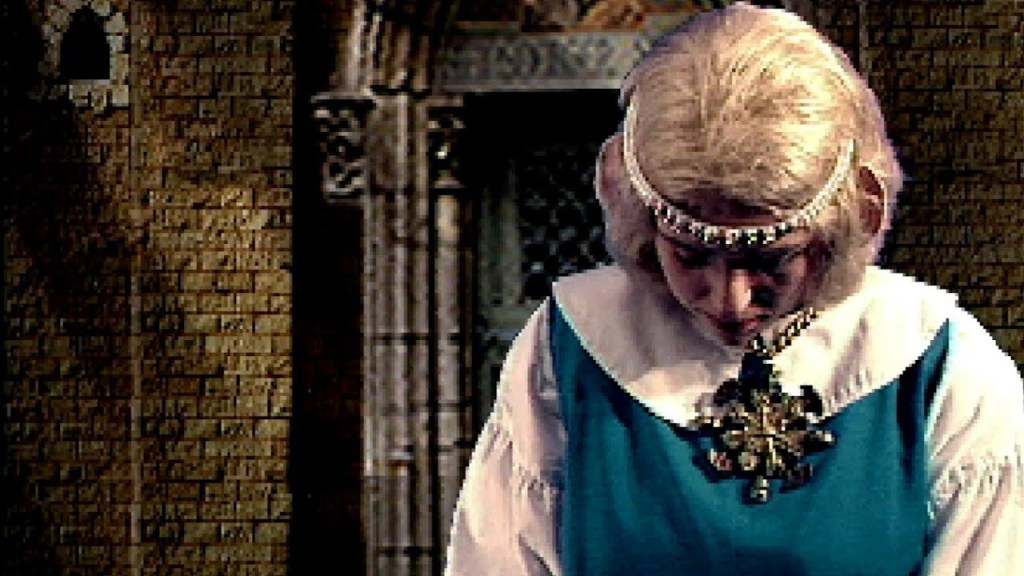
The opening cutscene throws you directly into conflict. Duke Onkled of Gamelon is “under attack by the evil forces of Ganon”. The king, Zelda’s father proclaims that he alone is… headed out, by himself, to defeat Gannon. Don’t you have knights or Link or someone to do that for you? At least take someone with you? Zelda protests, but the King retorts by telling her to send Link if she doesn’t hear from him within a month. Impa peers into the triforce of wisdom, which she claims promises the king will “return safely”. While the triforce isn’t lying, Impa clearly misinterprets its message. A month passes without word from the King. The CD-i doofus that is Link sets out, but apparently goes missing as well, as Zelda is seen waking Impa up and demanding they depart for Gamelon immediately. There’s so much exposition packed into this completely unhinged, 68 second cutscene, and almost none of it makes sense. The player is then unceremoniously dropped onto a painted map screen with a few available selectable options, one of which is the main hub of Sakado. Where and what is Gamelon exactly? Outside of Zelda’s main cannon, that’s where. None of the events of the three CD-i games are even mentioned in the official Hyrule Hystoria or Zelda Encyclopedia. WoG and FoE exist in a realm of semi-official fan fiction, and Nintendo likes to pretend they don’t exist.
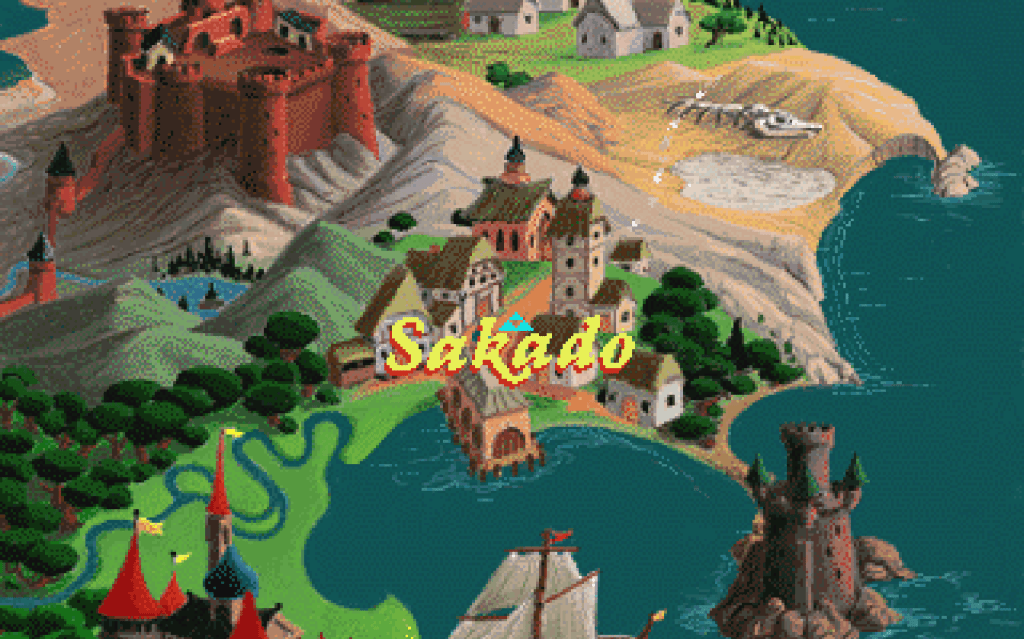
It begins.
My playthrough begins in Sakado, which, overrun with daira and arpagos, invites me into the hellscape that is Wand of Gamelon. Enemies spawn endlessly, and many seem to be just outside of my sword’s hitbox, but I swing early at first. Here I discover a handful of the game’s major shortcomings. Zelda’s attack animation consists of one frame. While this could feel tight and precise, instead it feels slippery and uncoordinated, and I have a feeling it feels better in the remake than it did in the original. The sword in the remake has a forgiving hitbox, but often the arpagos hit me as I hit them, or just before. It feels unfair and cheap. The remake seems to attempt fix this problem by adjusting the terrors’ trajectory, compared to the playthroughs I’ve seen on original hardware or emulation. There seems to be a lot more jumping outside of the remake. I could be imagining such a wonderful gift. The house in Sakado is pitch black, and I don’t have a lantern yet, so I exit, making my way to the right through the enemies to a house where a woman tells me to bring her some fairy dust. I take note. The shop on the leftmost side of town sells bombs, ropes, and lantern oil. I stock up on each with the rubies – that’s right, rubies, not rupees – I made from killing the endless swarm of enemies. I’ll need dozens of these items throughout the playthrough. Time to find the lantern?
Wand of Gamelon does a pretty decent job of letting you know what your next goal should be, but doesn’t always make clear where you can find that objective. After Sakado, I head to Aru Ainu, die to a Dodongo a few times before collecting his precious key, and meet a woman who gives me a green magical cloak. I’m sure this will come in handy later. Tykogi Tower is now unlocked, where I find Impa who tells me everyone’s been taken captive into the tower. Two more absolutely bonkers characters weigh in, including a bulbous chef, who actually gave me a chuckle. Here I spot another frustration in the gameplay. While trying to defeat a swooping arpagos, I accidentally trigger Impa’s cutscene again by hitting her with my sword instead of striking the enemy. When the scene ends, my attack animation plays out and defeats the arpagos. What a strange order of events. All the while, an octorock is hurling stones at me from off screen, slowly chunking away my three hearts. The tower is locked, so I head back to the world map. The now familiar music welcomes me back to the map, and I see that I can visit Kobitan. I wonder what fresh hell awaits.
I die once to the spear throwing moblins and make my way to a house at the end of the level. I die twice to the moblins before reaching the top of the house and collecting the lantern. My brain hurts. While I know now to make my way back to Sakado to the darkened house, I’m wondering why I’m having fun playing this game. Wand of Gamelon seems to be simultaneously repulsing and attracting me. The few cutscenes I’ve seen so far are so horrifyingly charming, I’m driven to keep going. Am I starting to see what the small, but loyal fuss is about? Still, I dread what’s to come. I’ve died a good handful of times, often to circumstances that feel, again, unfair and cheap. The barn in the top left is dark, so I open the menu – by crouching and hitting the third button, a wild choice – and select the lantern oil. Now I can’t remember which key activates items. There’s a terrifying enemy lurking in the darkness, and luckily, I press the correct key and activate the lantern. The room lights up, and I climb the ladder, getting hit before defeating the enemy, which I’ve later learned is called an acheman. He dies in one hit. Sick. I’ve collected a key, and I know the other house here in Kobitan was locked. I head over, dying once in the process. The moblins here continue to walk back and forth, and I am a careless gamer. I learn to be patient, blocking spears more often than not with my shield by not moving. Collecting rubies is becoming a hassle. With remake mode turned off, you have to hit them with your sword to collect them. This is a balancing act while avoiding the onslaught of enemies haranguing you at all times. I miss a lot of rubies as they blink out of existence. This could be a problem. I enter the locked house, and a cutscene of a woman lounging on the floor tells me she’d “give anything for an arpagos egg.” Another something to be on the lookout for, I suppose. Damn those moblins. Luckily, there’s an exit scroll shortcut here in the house. I take it back to the map screen.
Back in Sakado, I head to the darkened house and try to light my lantern. Somewhere along my journey I’ve accidentally switched to my ropes, so Zelda throws one up, climbing directly into the path of a keese and the moblin’s spear. Not a great start. I kneel and open my bag, switching to the lantern and quickly light the room. The climb up the chains gets me hit by another keese, and I enter the door at the top. Keese almost kill me and I swipe at an item to get the power sword. Now, it seems, Zelda will shoot a sword-dagger-projectile-thing whenever she has full health. My hearts blessedly refill, and a daira spawns to the right. I shoot it with my new power sword. Exiting the building I get hit twice, and head back to the map screen. Where to next?
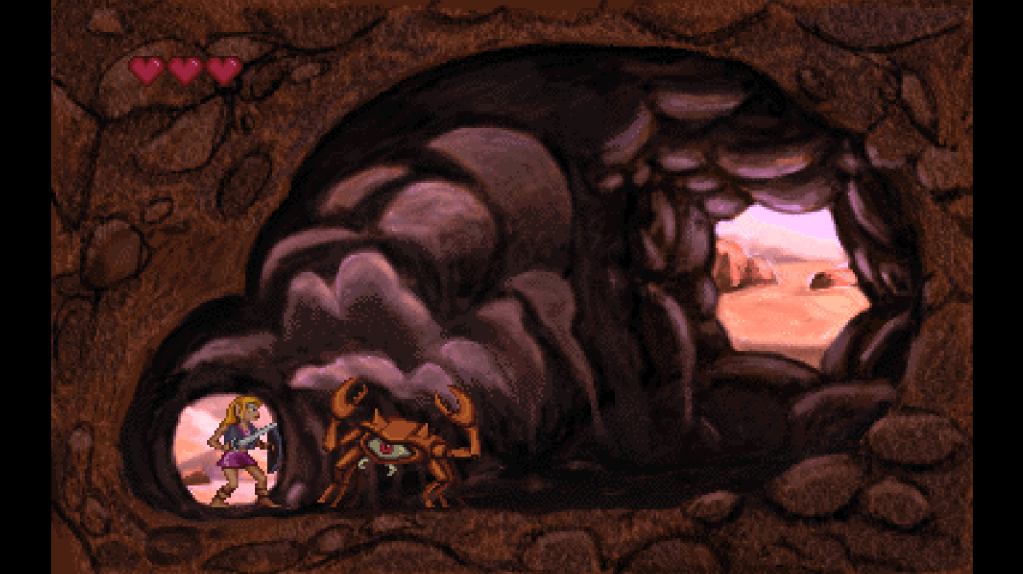
Ahitaru, north of Sakado, presents me with new annoying flying enemies, and a giant ghoma in a cave. The trouble with hitting enemies in Wand of Gamelon is that there is almost no indication you’re doing any damage. Enemies don’t flinch or stop moving. It’s also almost impossible to tell when you get hit, besides your heart meter going down. There’s a small explosion animation when enemies get hit, and I suppose that’s enough to tell you you’re doing the right thing. But this ghoma takes a lot of hits and I almost panic. It’s a good thing I still have full hearts and a power sword available. The ghoma dies and I continue to the right. Outside, another ghoma awaits, and an arpagos swoops from the left. To the right, I attempt a jump, and immediately die to the chasm below. It sure looked like I made the jump. The continue screen flashes again, and I’m sent back to the start to try again. I die to the chasm again, and realize I’m supposed to go up a level to jump across the gap after I faceplant into the wall below. The backgrounds, while beautiful, do a pretty terrible job of indicating walkable and unwalkable paths to a newcomer like me. I try again and notice that more often than not, my power sword bolt flies straight through the ghoma doing no damage, only hitting it maybe one out of four times. Very frustrating, but I’ve come to expect no less from WoG. I’m rewarded with another cutscene, a drink from a jug that refills my hearts, and the woman notes “hey, there’s a fisherman trapped in the fish head!” To which Zelda simply replies “really?” animated eyes bulging. The charm never ends. A giant boulder blocks my way forward, and after chucking six bombs, I realize it’s going to take more. Frustrated, but laughing, I trudge back across the desert as there’s no shortcut scroll here. I pick up a metric ton of bombs from the shop, also restocking on lantern oil and a few ropes. The item reload animation takes about two full seconds to restock an item, so the process is arduous. I resupply while the shop keep paces wildly back and forth. This was unfair, but now I know – hopefully – that these blocked paths take a lot of bombs. I head back to test my hypothesis. I move back outside before remembering there’s no exit to the level out here. I abashedly re-enter the shop to jump to the exit scroll at the top. I tell the shop keep to ignore me as I purchase even more items on my way – until his animation pops up saying “Sorryyyy Zelda, not enough rubieeees!” Hush. I make the journey back through Ahitaru to the boulder, cross my fingers and start hucking bombs. Ten bombs later, the boulder explodes. I admit, while the process felt unfair and tedious, the satisfaction that my hypothesis paid off was pretty special. I really am starting to get it. I’m not having fun, but I’m not not having fun. There’s definitely more I want to see. Inside the fish head, a shirtless elf man thanks me for saving him, saying that’s the last time he’s going fishing, and tells me he’ll see me in Sakado. The animation again makes me chuckle out loud. The creativity and charm of the animated cutscenes do a lot of heavy lifting in the game. They really are something special. You just have to lean in. I collect the key and hit the exit scroll. Back to town!
The door I thought I could unlock now in town remains locked, and I die to a swooping arpagos, and I am at a loss. I head back to the map and scroll around. I notice that Shutoy Lake is unlocked, so I head in. Two dodongos patrol the area, and the arpagos here are absolutely ruthless. The first building on the path houses three moblins and nothing else. The second house is locked. Now I’m hopelessly at a loss. I head back to Tykogi Tower, remembering there was a bombable boulder on the far right. Octorocks are truly heinous enemies. The rocks they hurl come at what feels like rapid fire and at such awkward angles that my shield almost never blocks them. Defeating the eight legged monsters, I throw a slew of bombs at the boulder in front of the tower and head inside. The chef greets me, telling me to meet him in Sakado. Armos patrol back and forth, but luckily die to one hit. I don’t see the wallmasters sticking out of the background, and they destroy me. I make my way to the top, and I’m confronted with a cutscene with the first boss I’ve encountered – The Iron Knuckle. The attack animation shows a blue explosion along with the normal orange explosion, and after throwing about 50 power sword bolts at him, I’m convinced I’m not doing anything. That can’t be it. Bombs yield the same result, and the green shroud seems useless as well. For some reason, the game really starts chugging, and cutscenes voice acting finish before their animation. The game is running at about 75% speed. I have no idea what is causing this, so I restart the game after saving from the map screen.
Again, I feel stumped. Two characters have now told me to meet them in Sakado, but after exploring the whole town, I can’t seem to find them. I’m worried I might have to use a walkthrough. I didn’t want to do that. After reloading the game – which runs at full speed again, I head back to Sakado, stocking up on bombs until the shopkeep animation pops up again, telling me I’m broke. I hate this character so much, I decide to take a detour to the Zelda wiki to learn these characters names, just so I can rage against him properly, only to find his name is simply The Merchant. Wonderful. I see that the chef’s name is Harbanno, and that’s just delightful enough to keep me going. I explore the town, and don’t see the fisherman or Harbanno anywhere. Reluctantly, I pull up a walkthrough. It turns out there’s an exit through the window in the far house on the right with the woman who requests fairy dust. There is a staircase leading up to the window, so I suppose I would’ve found that exit eventually, but I’m reminded again how poorly the game informs you of what can and can’t be interacted with or walked upon. Either way, I’m glad I took a quick look so I can continue. I truly do want to keep exploring the world of WoG. I’ve noted that the game is starting to have trouble when I tab out to my browser. I’ll have to keep that to a minimum. From what I can tell, it’s a my computer thing, not a WoG Remastered thing.
I returned later that day, ready to jump back into the world of WoG. I find the rescued fisherman in the blacksmith’s shop, asking for a heat crystal to “fix up [my] sword.” His canonical name is Yokan, and that’s just fantastic. I have no idea what he means by a heat crystal, so I head back out into town. The game is starting to feel almost good as I return to it. The stiff but slippery controls start to feel comfortable under my fingers. I’m still flustered again at always standing too close to rubies to slash them and try to pick them up, only to back away as they begin to blink, and then they almost disappear before I can collect them properly. I wonder if the big door on the church can open, and my guess is that one of the keys I’ve collected unlocks the door. It does! Another cutscene plays, introducing an obvious-actual-hopefully-first boss. The mummy that is Gibdo threatens that “the dead shall rise, and the living shall become their slaves.” A bit uncomfortable in the wording, but charming in its animation as ever. The room is dark, so I kneel to equip my lantern, only to accidentally select the door again and get pushed back outside. Yeesh. I step aside, equip my lantern, and head back in. I light up the room and climb up the organ, defeating more stalfos on the way. A first opportunity to make use of the rope presents itself, and I climb to the top to be presented with a sprite of Gibdo, shuffling his way along the top platform. I throw up a rope, which fails to attach. It’s then I notice the two chains in the center leading up. My lantern goes out, so I fumble with opening my bag again and relighting the room. In doing so, I notice the green shroud. I take a wild guess that it will defeat Gibdo. I climb the chain directly into his feet and die. One hit from Gibdo sends you to the Continue screen. That one’s on me. I try again, fumbling with lantern light and ropes, and make it again to the top. I light the room yet again as it goes dark and equip the shroud. I climb the chains, waiting for Gibdo to pass, and press the item button, throwing the shroud in his direction. It sails unceremoniously at the mummy, and another cutscene plays. “The shroud,” he shouts, “it’s cold!” It wraps around Gibdo as he shrinks and disappears. He spawns an exit scroll and a ruby. I take both, and I’m dumped back out onto the map screen, my cursor over a new location, Washubi Swamp. Knowing where to go, but wanting to take a detour, I head back to Kobitan to turn in the arpagos egg.
I find another whole section of town and head to the first door I see on the right. A surprise daira assaults me, taking away my power sword. The next room is a climb, with more swooping arpagos. Why and how are they inside this house? Walls mean nothing to arpagos. Arpagos are unstoppable. I just barely make it to the top and claim an arpagos egg. It feels good to be back on track. I exit the tower, and head to the building on the left over the water. Impa is here, and she tells me that the king has been captured, and when asked by Zelda, says that Link has been “in a terrible fight”. This particular cutscene seems so odd for some reason, that I do some research into the voice actors. The English cast is comprised of a group of most likely union actors from the North East, particularly Boston. I have to admit, while the performance isn’t of the highest quality, the actors really seemed to lean into the roll, especially some of the side characters. Even Zelda has an awkward charm about the line delivery, and Impa is clearly a young woman doing an old woman voice. Every frustrating step I take in WoG makes me more and more curious, and more and more enthralled. Back outside I head to the right and discover a cemetery. Ghini ghosts come at me from all directions, some spawning directly on top of me, killing me in another unfair series of events after I blow up a pillar adorned with skulls. A stalfos guards a key to the left and I head back to town. Once again, while trying to pause the game by crouching and hitting button three, I’m taken back through a door unwillingly. I exit again, move aside, and pause for a break.

I spend the rest of my day thinking about Wand of Gamelon. I had originally set out to see why these games were so hated and revered in such equal measure. Most people know the three games as a travesty, but the whisperings I had heard of a ravenous, loyal community lead me to see what the fuss is about, and I’m really starting to get it. My mind swims with the bulging animations of the cutscenes, and I wonder where my adventures will take me next as I head off to work.
This is a vertical slice of Wand of Gamelon. The rest of the game plays out in similar fashion, though getting trickier with both enemy placement and platforming challenge. Ropes are used far more often than the initial hour would suggest. At least I used them a lot. There are seven total bosses to fight, seventeen locations, a few more characters to meet, 36 different enemy sprites, and plenty more cutscenes to play out. By the end, defeating Ganon feels like an afterthought. It’s really the locations and minute to minute frustrations, challenges, and rewards that give Wand of Gamelon it’s true charm. The ending cutscene feels both hollow and fulfilling, but truly hilarious. Spoiler ahead for the rest of the paragraph. Ganon gets smooshed into the book, Zelda climbs the rest of the tower, and stabs her father with her sword to trigger the final cutscene. The traitor Duke Onkled is sentenced to scrubbing “every floor in Hyrule”, and Link is freed from the mirror, which Zelda smashes. Link asks what happened, they inform him they were just about to have a feast, which he’s just simply stoked on. It’s unhinged, and wildly animated, and holds this strange empty weight upon completion of the game.
Each boss’ defeat cutscene is creative and confusing, and so charming. The music throughout the adventure is very much of its time. Tony Trippy’s soundtrack bangs with funky bass riffs and the overworld map will get stuck in your head for days. The sound effects leave something to be desired, but are serviceable and memorable. I’ve found why these games have such a cult following, and I’d even go so far as to say they don’t deserve all of the hate they receive. Sure, they don’t fit in the broader quality spectrum of every other Legend of Zelda game, but taken in their own right, there’s a certain magnetism present that brings you back again and again into the strange world of the CD-i Zeldas. To their credit, they follow a similar line of puzzle adventure that the rest of the series does. It’s in the minutia they fail and succees. I’ve dipped into Faces of Evil and it plays, looks, and feels all but identical to Wand of Gamelon, save for the main character being Link instead of Zelda, and the overarching story being told. So for those of us who see the charm and adventure in these puzzle platformers, there are two whole games of this style to dive into. While the game can be completed in much shorter time if you know where you’re going and what you’re doing, a first experience can take three to five hours, depending. If you don’t get stuck like I did.
The third CD-i Zelda: Zelda’s Adventure, has an even rougher reputation than the first two, and we’ll be taking a look at it in the next part of this three part series. Part Two delves into the world of the community surrounding these three games. We speak with speed runners, and the people making the remaster of Zelda’s Adventure, along with folks who just generally are entranced by the games. It’s a wonderfully pleasant and tight-knit community, and they deserve to be highlighted.
The remastered versions of Wand of Gamelon and Faces of Evil can be downloaded as a single package here. I do truly recommend giving these games a shot. You might just come away feeling as invested as I did, curious to know more. Thank you so, so much to Dopply for the beautiful remasters and making these games so enjoyable. I had a blast, and I can’t wait to play more of Faces of Evil Remastered in all its strange glory.
CD-i Zeldas show that even in perceived failure, real treasures can be found. Nothing we do is for naught. Even something like these games can bring joy to so many people. Yes, they are frustrating experiences at times. They are a symptom of their time and their given hardware, but there is fun to be had, and success to be experienced in these “failures”. There are no nuanced themes tackled. The game is straightforward, and the story simple, but I’m a newly converted fan, and I think you can be too.
hyperfocus

Dawntrail has been out for a while now, and I’ve spent my time leveling my fresh new Pictomancer job up to 90 and wrapping up post-Endwalker content before I dive into the new Main Story Quests. The graphical update is absolutely beautiful, and the Zero/13th story quests are spectacular. Zero has become my new favorite character. There’s so much about her to identify with. She’s an alien in a strange world, learning the ways of trust and friendship. By the end she’s able to explain what she’s learned to those who have done her harm, and is transformed in her new understanding. I’ve hit about the 700 hour mark by the end of Endwalker, and there’s an unending amount of stuff more to do besides the MSQ in Dawntrail. Final Fantasy XIV is a spectacular way to spend your time, and now is a great time to join. Did you know that the critically acclaimed MMORPG Final Fantasy XIV has a free trial, and includes the entirety of A Realm Reborn AND the award-winning Heavensward expansion up to level 60 with no restrictions on playtime? Sign up, and enjoy Eorzea today!
 gAmeDHD
Leave a comment